
The COST Action CA21113: Genome editing for the treatment of Human Disease is a network committed fostering young talent in the genome editing field and thus organized several Training Schools in 2026 to reach most topics and prospective young researchers all over Europe.
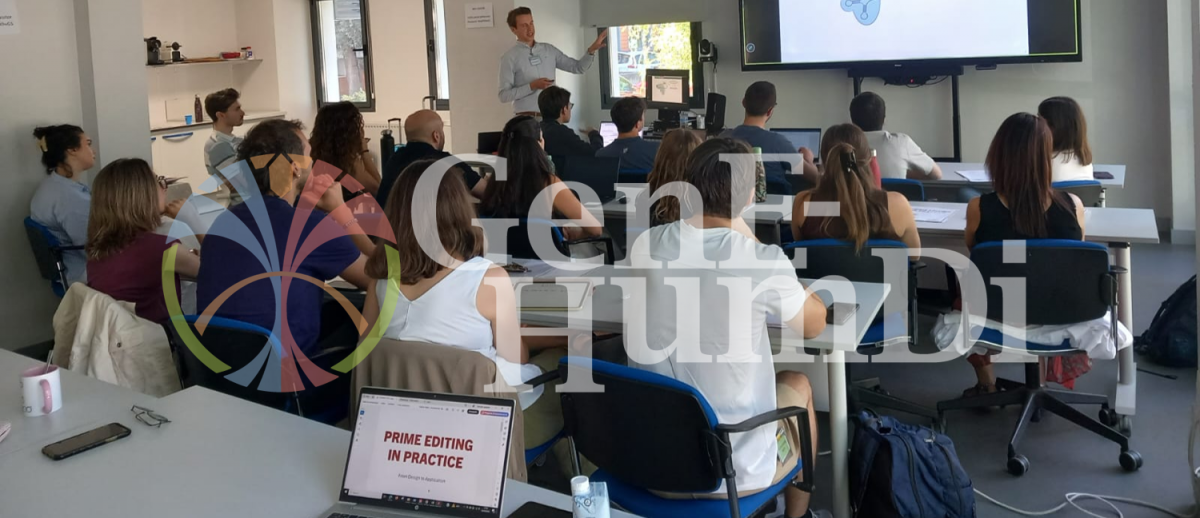
Our most recent COST Action Training School, “PRIME EDITING IN PRACTICE: From Design to Application”, has successfully concluded, marking a significant milestone for the European genomics community. Hosted as part of the ongoing initiative to foster advanced genetic research (details available in previous post), the event took place at Ciemat ( Madrid, Spain) and brought together a dynamic group of international experts and emerging researchers. The Excellence of this Training School was sanctioned by the support of Spanish Advanced Therapies Network ( Red TeRav+) and the Spanish Society of Gene and Cell Therapy (SETGyC).
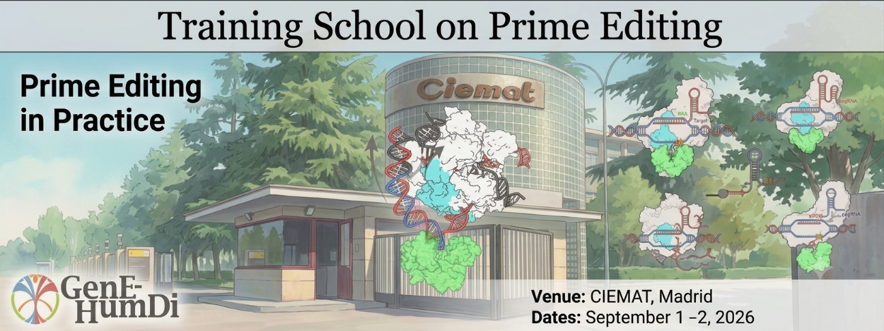
Prime editing is rapidly emerging as a highly promising and precise genome editing tool, offering unprecedented potential for correcting the genetic mutations responsible for inherited diseases. To ensure Europe remains at the forefront of this critical medical frontier, the training school focused heavily on translating this theoretical promise into practical laboratory skills.
The intensive training program featured 10 distinguished international trainers who provided hands-on instruction and mentorship to 17 trainees selected from across Europe. The participants gained critical, cutting-edge genome editing skills and established vital networking connections that will warrant and drive the future of genome editing collaborations throughout Europe.
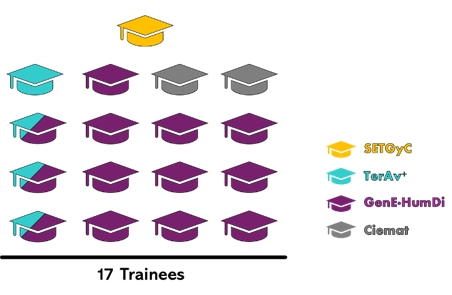
Majority of trainees were granted support from European GenE-HumDi COST Action, but also Spanish SETGyC and Red TerAv+ contributed to pave a brighter future your young Genome eEditing Talents.
The comprehensive Prime Editing in practice two-day curriculum bridged the gap between theoretical knowledge and laboratory execution. The schedule immersed trainees in the complete prime editing workflow:
- Tuesday, July 1st: Participants opened the school with a comprehensive prime editing overview. This was immediately followed by a practical session covering PEmax mRNA in vitro transcription, alongside a workshop dedicated to guide design tools. Following the lunch break, the trainers led an afternoon practical session on RNA purification and further practical work in guide design.
- Wednesday, July 2nd: The second day expanded into broader medical use cases with two dedicated sessions on prime editing applications. After the lunch break, trainees applied their knowledge in a highly technical practical session on PE nucleofection, utilizing PE mRNA and guides. The technical training concluded with a practical session on CRISPResso analysis to verify editing outcomes.
Beyond the exceptional technical instruction, the trainees and trainers established vital networking connections that will drive collaborative research. By equipping these 17 European trainees with direct experience and invaluable expert contacts, the COST Action has helped to warrant a bright, collaborative future for genome editing therapies in Europe.
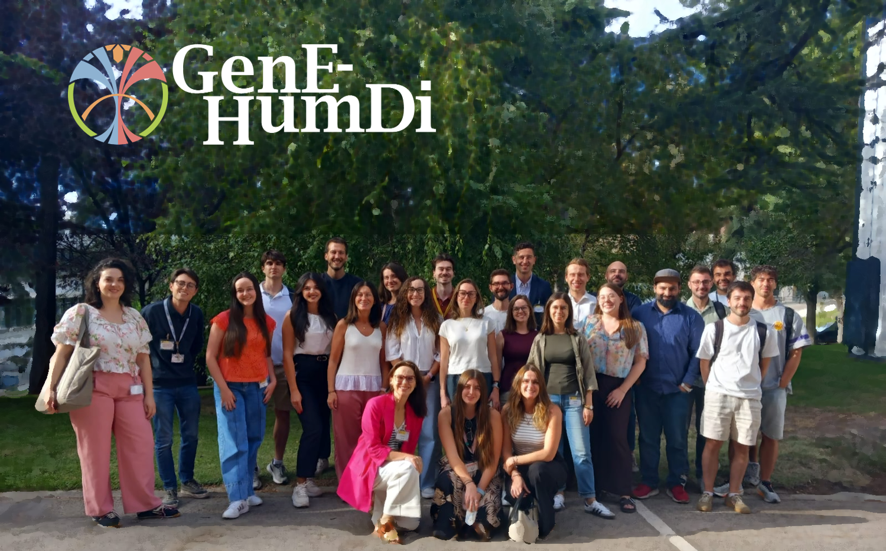
Participants of the GenE-HumDi Training School: Prime Editing in Practice: From Design to Application, posing during a course break
For more information about the training school and future COST Action events, please visit https://www.genehumdi.eu/prime-editing-in-practice.
